Proxmox Compute
Virtual machines and containers for services, testing, automation and the occasional late-night side quest.
Self-hosted in Gloucestershire, powered by coffee and questionable impulse purchases
Infrastructure. Energy. AI.
A personal infrastructure lab combining Victron energy storage, MikroTik networking, Proxmox compute, TrueNAS storage and local AI systems — built, broken, rebuilt and hosted on my own infrastructure.
About
RizoHomeLab is my personal infrastructure and energy lab. It brings together smart energy management, segmented networking, self-hosted services, storage, backups and local AI into one constantly evolving system. The goal is simple: learn by building useful things, then document the chaos before I forget how any of it works.
Infrastructure
A practical self-hosted lab built around Proxmox, TrueNAS, MikroTik routing and switching, VLAN separation, WireGuard access and a healthy disregard for leaving things alone once they work.
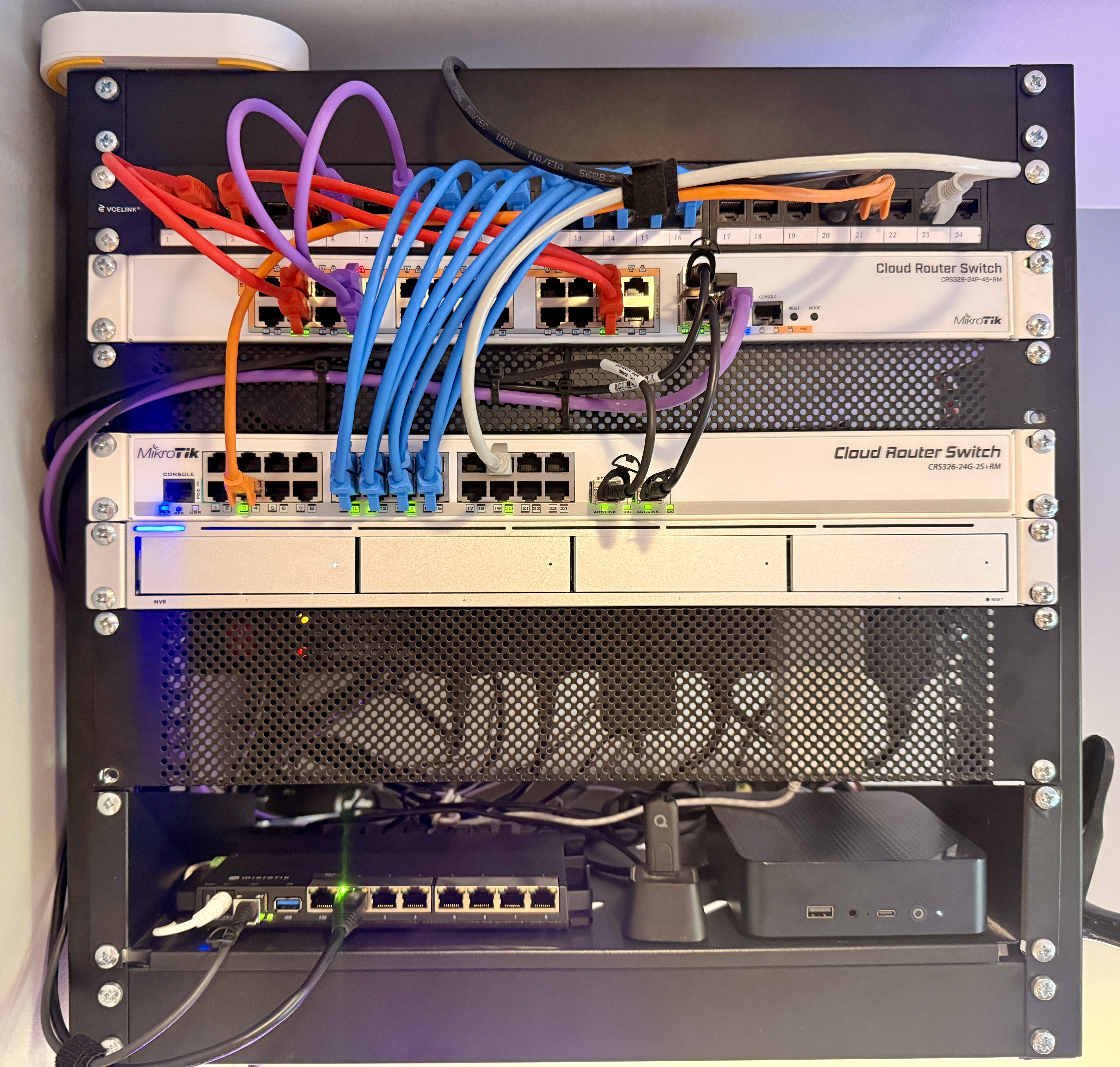
Virtual machines and containers for services, testing, automation and the occasional late-night side quest.
Bulk storage for media, backups, datasets, service data and the files that definitely should have been organised years ago.
RB5009 routing, CRS326/CRS328 switching, VLAN segmentation, 10Gb links and enough firewall rules to make future me question my choices.
Local Models
A self-hosted AI platform built around AMD EPYC compute, professional NVIDIA GPUs, Mellanox 10Gb networking and enough RAM to run virtual machines, local LLMs, coding agents and automation workloads without relying on cloud services.
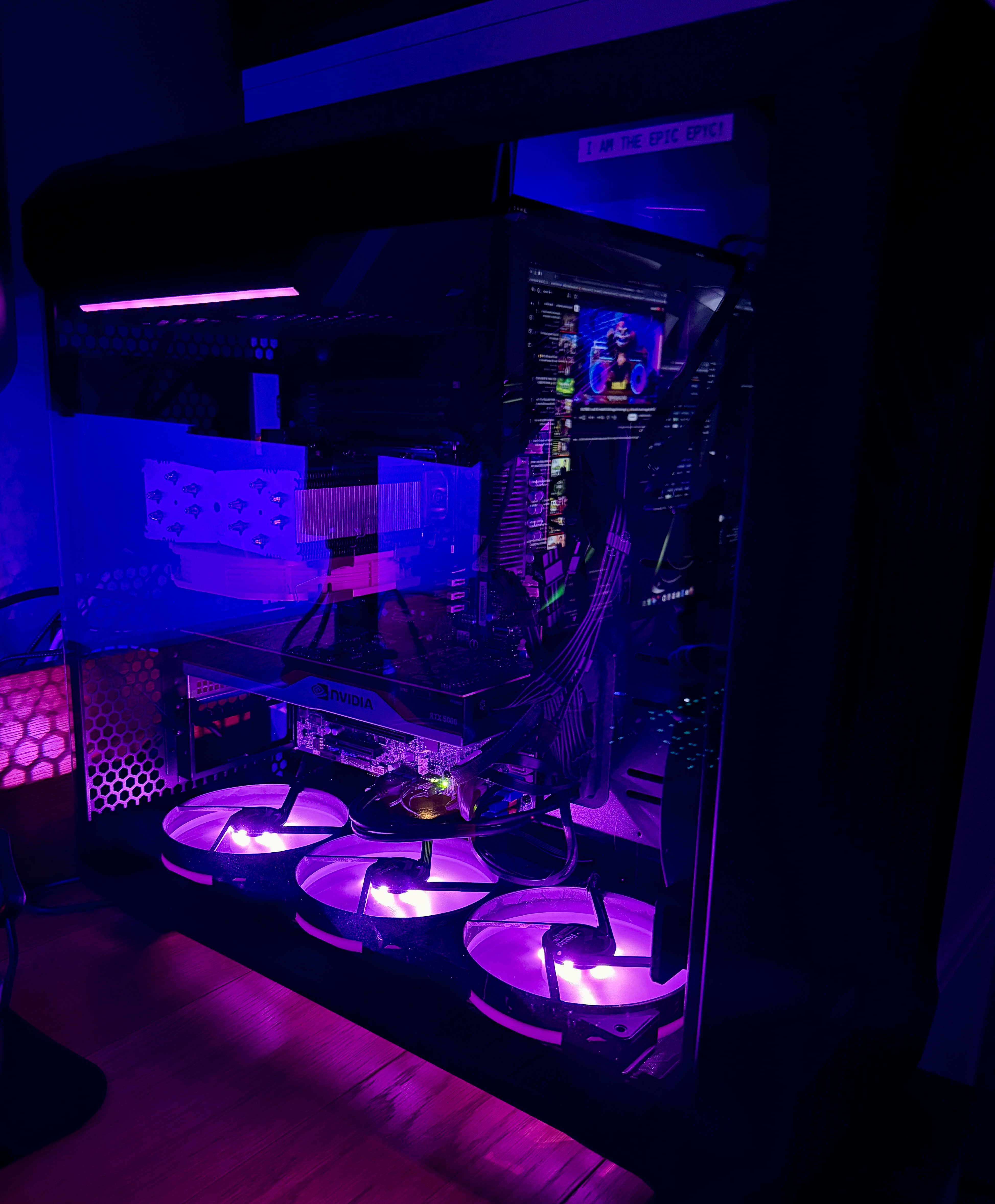
32 cores, 64 threads and 128GB ECC memory provide the foundation for virtual machines, containers, local AI tooling, development environments and the occasional infrastructure experiment that gets slightly out of hand.
Two professional RTX 5000 GPUs provide 32GB of combined VRAM for local inference, coding agents, reasoning models, Open WebUI and rapid experimentation without API costs.
Mellanox 10Gb networking, TrueNAS storage, Ollama, OpenCode and Open WebUI combine into a practical local AI environment where models, agents and services stay entirely under my control.
AMD EPYC 7452 enterprise compute.
Memory capacity for AI, containers and virtualisation.
Dual RTX 5000 GPUs for local inference.
High-speed backbone for storage, compute and services.
Current Builds
A rolling collection of infrastructure, automation and AI projects. Some are finished, some are useful, and some started with the dangerous words “I wonder if…” before becoming suspiciously permanent.
Self-hosted on Debian and Caddy, replacing a VPS with a public IP, HTTPS, static files and a much better excuse to relearn web design.
Routed VPN links between home, work and family infrastructure for backups, remote access and general sysadmin convenience.
Uptime, network visibility and service dashboards to spot problems before they become “why is nothing working?” moments.
Local coding agents, SFTP file access and model testing to make the HomeLab less of a black box and more of a useful assistant.
Exploring OpenCode, Ollama, local LLMs and agent workflows running entirely on self-hosted infrastructure.
Perimeter Monitoring
Physical security is provided by Enzo, a Fox Red Labrador specialising in parcel alerts, garden patrols, snack detection, stair surveillance and sock-theft incident response.

Operational, unless asleep, eating, or pretending not to hear recall commands.
Elevated. Multiple socks remain unaccounted for and all cheese is considered vulnerable.
Immediate for cheese, delayed for actual security incidents.
Smart Energy
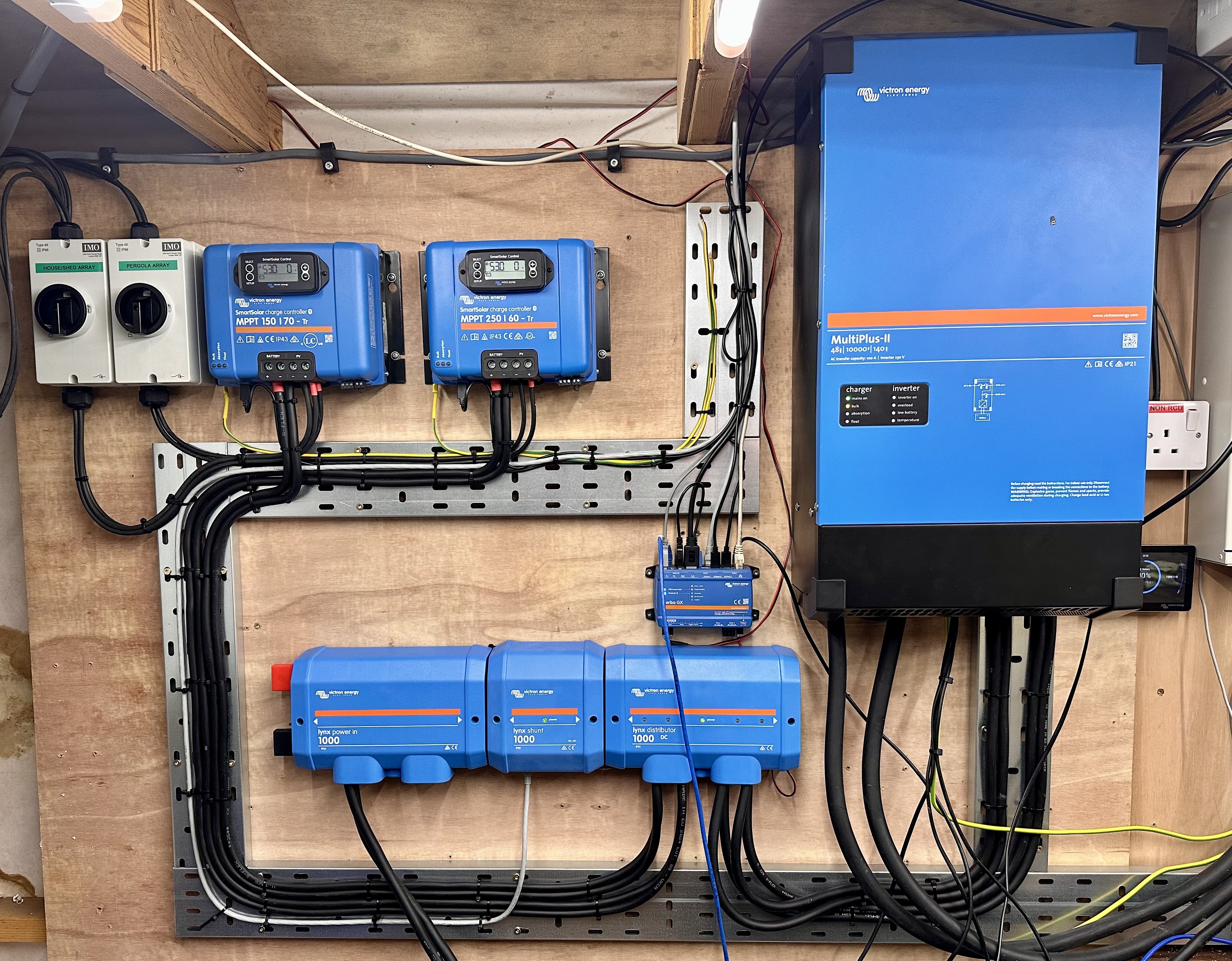
A 48V Victron ESS built around large LiFePO4 storage, solar generation, intelligent tariff charging and Home Assistant automation. The system is designed to soak up cheap overnight energy, capture solar during the day and keep the house running with minimal grid reliance.
Three 16S battery packs provide a large home energy buffer for overnight charging, solar capture and resilience.
PV generation, Solcast forecasting and automation help decide when to charge, hold battery capacity or divert surplus energy into useful loads.
Automations coordinate battery state of charge, immersion loads, tariff windows and visibility across the house.
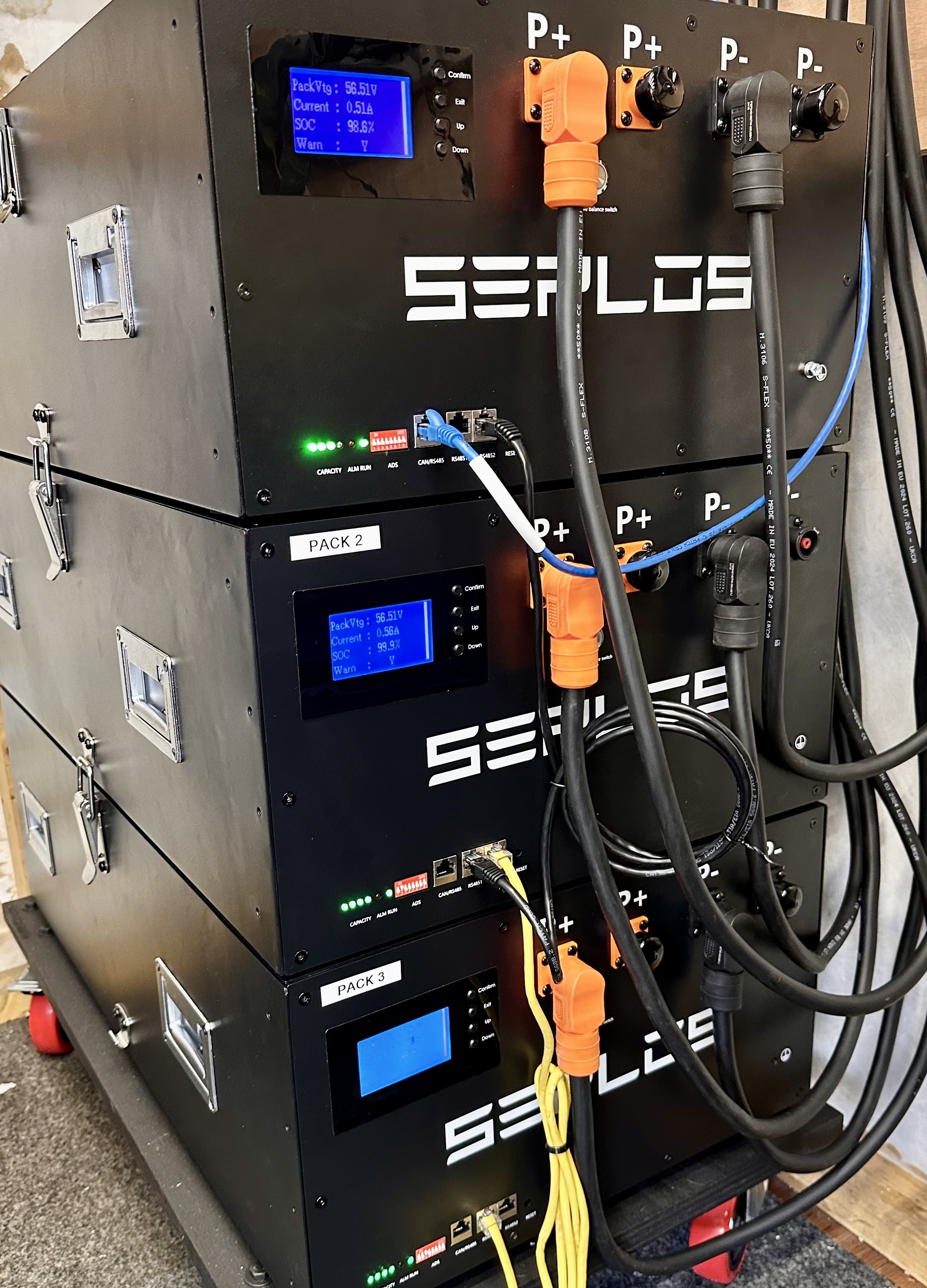
16S LiFePO4 storage built around Seplos battery management systems.
Large energy reserve for overnight charging and grid independence.
MultiPlus-II, MPPT solar chargers, Cerbo GX and Home Assistant integration.
Forecast-driven charging and surplus energy utilisation throughout the year.
Get In Touch
Based in the heart of the Cotswolds near Cirencester, Gloucestershire.
The Cotswolds, near Cirencester, Gloucestershire, United Kingdom.
If you'd like a chat about anything you've seen on here, drop me an email. I'm always up for a chat.